




![Successful Investment: Mastering the Art of Financial Growth [ e-book 2024]](https://digitfile.com/wp-content/uploads/2024/03/71.webp)


![Earn Crypto: The Ultimate Guide to Online Income with Digital Currency Payments [ E-book 2024 ]](https://digitfile.com/wp-content/uploads/2024/03/7.webp)

Introduction
Latest Techniques in Image Processing have evolved significantly with advancements in artificial intelligence (AI) and machine learning (ML). New techniques have emerged, enhancing image clarity, recognition, and manipulation. This article explores the latest trends in image processing, ensuring adherence to SEO guidelines for better visibility and ranking.
1. Deep Learning in Image Processing
1.1 Convolutional Neural Networks (CNNs)
CNNs have revolutionized image processing by enabling automatic feature extraction, reducing the need for manual intervention. Applications include:
- Object Detection (e.g., YOLO, Faster R-CNN): These models can detect multiple objects in a single frame with high accuracy and speed. YOLO (You Only Look Once) is known for real-time detection capabilities, making it ideal for video surveillance and autonomous systems. Faster R-CNN offers high precision and is commonly used in applications where accuracy is more critical than speed, such as medical diagnostics and document analysis.
- Image Classification (e.g., ResNet, VGGNet): These architectures classify images into predefined categories. ResNet (Residual Networks) solves the vanishing gradient problem and allows training of deeper networks, making it suitable for complex classification tasks. VGGNet, with its simple and uniform architecture, is widely used for transfer learning and has set benchmarks in image classification challenges.
- Facial Recognition (e.g., FaceNet): FaceNet maps facial features into a compact Euclidean space, allowing for efficient comparison and recognition. It is used extensively in security systems, authentication tools, and social media tagging. Modern applications include emotion detection and real-time face tracking in smart devices.
1.2 Generative Adversarial Networks (GANs)
GANs create high-quality synthetic images, useful in:
- Image Super-Resolution: This technique enhances the resolution of an image without sacrificing detail. GAN-based models like ESRGAN can convert low-resolution images into photorealistic high-resolution versions. This is particularly beneficial in medical imaging, satellite imaging, and enhancing legacy video footage.
- Style Transfer: Style transfer uses deep neural networks to apply the artistic style of one image (like a painting) to another image, often retaining the original content structure. It has gained popularity in digital art, creative media, and content generation tools. Advanced methods allow real-time transfer and multi-style learning.
- Data Augmentation for Training Deep Models: GANs are also used to synthetically expand training datasets by generating new, realistic samples. This is extremely useful when working with limited labeled data, such as in rare medical conditions, and helps improve model robustness and generalization.
2. Super-Resolution Imaging
Super-resolution techniques enhance image quality by reconstructing high-resolution images from low-resolution counterparts. Some leading methods include:
- ESRGAN (Enhanced Super-Resolution GAN): ESRGAN improves upon the original SRGAN architecture by using a Residual-in-Residual Dense Block (RRDB), resulting in sharper and more detailed images. It’s widely used in media restoration, including upscaling old videos and low-quality images to HD or even 4K resolution. ESRGAN maintains perceptual quality and excels in recovering texture details, making it ideal for artistic and commercial applications.
- SRGAN (Super-Resolution GAN): One of the first GAN-based models for image super-resolution, SRGAN focuses on perceptual loss rather than pixel-wise accuracy. It generates photo-realistic images and is particularly effective in scenarios where visual appeal is more important than precise accuracy, such as in consumer apps and digital content platforms.
- Deep Laplacian Pyramid Networks: This approach decomposes the image into different frequency bands using a Laplacian pyramid and reconstructs the high-resolution image in stages. It ensures more accurate restoration of fine details and reduces artifacts. This technique is especially useful in medical imaging, microscopy, and satellite image enhancement where precision is crucial.
3. Edge Detection and Image Segmentation
3.1 Advanced Edge Detection Methods
Edge detection helps identify object boundaries in images. Recent techniques include:
- Canny Edge Detection (Enhanced with Deep Learning): The traditional Canny edge detector is renowned for its ability to detect fine details by applying Gaussian smoothing, gradient calculation, and non-maximum suppression. Deep learning-enhanced versions use neural networks to dynamically adjust thresholds and improve edge continuity, making them suitable for complex environments like natural scenes or noisy medical scans.
- Sobel and Prewitt Operators: These classical gradient-based methods detect edges by highlighting areas with rapid intensity changes. While simple and computationally efficient, they are often used as pre-processing steps or combined with advanced models in hybrid edge detection pipelines for real-time applications and embedded systems.
- HED (Holistically-Nested Edge Detection): HED uses deep convolutional networks to learn hierarchical features for edge detection. It produces edge maps that preserve fine object boundaries across multiple scales, which is valuable in tasks like semantic segmentation, biomedical imaging, and scene understanding. HED’s end-to-end training makes it robust in diverse lighting and texture conditions.
3.2 Image Segmentation with AI
Segmentation divides an image into meaningful regions, enabling:
- Medical Image Analysis (e.g., Tumor Detection): Advanced segmentation models like U-Net and V-Net are capable of identifying tumors, lesions, and other anomalies in medical scans such as MRI, CT, and X-rays. These tools assist radiologists by highlighting areas of concern, leading to faster and more accurate diagnoses. Deep learning has significantly improved the sensitivity and specificity of tumor detection, especially in early-stage cancers.
- Autonomous Driving (e.g., Road and Obstacle Segmentation): In self-driving vehicles, real-time semantic and instance segmentation is crucial for understanding the environment. Models like DeepLabV3+ and Mask R-CNN are used to identify road boundaries, pedestrians, vehicles, and traffic signs. Accurate segmentation ensures safe navigation, lane keeping, and obstacle avoidance in diverse driving conditions.
- Background Removal in Digital Imaging: Background subtraction techniques powered by AI, such as segmentation networks and matting algorithms, allow for the automatic removal or replacement of image backgrounds. These are widely used in e-commerce, virtual meetings, photo editing apps, and content creation. With real-time capability, users can achieve professional-looking results without the need for green screens or manual editing.
Popular segmentation models:
- U-Net (widely used in medical imaging)
- U-Net is a convolutional network architecture designed specifically for biomedical image segmentation. It has a symmetric encoder-decoder structure, with skip connections that allow the model to capture both spatial and contextual information. This makes U-Net highly effective in segmenting anatomical structures, detecting tumors, and analyzing pathological features in medical scans like MRI, CT, and ultrasound. Its ability to perform well even with limited annotated data makes it a go-to choice in clinical applications.
- Mask R-CNN (for instance segmentation)
- Mask R-CNN is an extension of Faster R-CNN that adds a branch for predicting object masks in parallel with bounding box recognition. This enables it to perform instance segmentation, which means detecting and delineating each object instance separately within an image. It’s used in applications requiring fine object-level understanding such as robotics, scene parsing, and even medical diagnostics where distinguishing between closely located structures is essential. Its flexibility and accuracy have made it a standard for tasks involving multi-object segmentation.
- DeepLabV3+ (for semantic segmentation)
- DeepLabV3+ is an advanced model for semantic segmentation, which assigns a class label to every pixel in the image. It utilizes Atrous Spatial Pyramid Pooling (ASPP) and a decoder module to capture multi-scale context and refine boundaries. DeepLabV3+ excels in understanding complex scenes and has been extensively used in autonomous driving, aerial image analysis, and smart city infrastructure mapping. Its ability to preserve fine details while processing large images makes it suitable for both real-time and offline applications.
4. Image Denoising Techniques
Image noise removal enhances clarity, particularly in low-light conditions. Advanced techniques include:
- Non-Local Means (NLM) Denoising: NLM filters each pixel by comparing patches within the image, leveraging redundancy to smooth noise while preserving details. It is effective for natural images and is commonly used in medical imaging and photography.
- BM3D (Block-Matching and 3D Filtering): BM3D groups similar 2D patches into 3D stacks and applies collaborative filtering. It is considered one of the most effective traditional denoising methods, achieving state-of-the-art results in Gaussian noise reduction.
- Deep Learning-Based Denoising (e.g., DnCNN, FFDNet): These models use convolutional neural networks to learn the mapping from noisy to clean images. DnCNN removes additive white Gaussian noise with high efficiency, while FFDNet extends this by supporting spatially varying noise levels. They outperform classical methods in both quality and speed, and are used in smartphone photography, surveillance, and medical image restoration.
5. AI-Powered Image Compression
Efficient image compression is essential for reducing storage requirements and improving load times on websites and mobile applications without significantly sacrificing image quality. Recent innovations in this domain are AI-driven, delivering superior performance compared to traditional methods.
- JPEG AI (AI-Based JPEG Standard): JPEG AI is an advanced compression standard being developed by the Joint Photographic Experts Group. It leverages artificial intelligence and machine learning models to optimize compression while preserving perceptual quality. JPEG AI aims to provide better performance than JPEG and HEIC by producing smaller file sizes with improved image fidelity. It is particularly useful for industries dealing with massive image datasets, such as medical imaging, e-commerce, and social media platforms.
- Learned Image Compression (LIC): Unlike conventional codecs with hand-crafted algorithms, LIC employs deep neural networks trained to understand image structures and redundancy. These models learn end-to-end pipelines for encoding and decoding, offering better rate-distortion tradeoffs. Techniques like autoencoders and variational autoencoders (VAEs) are commonly used in LIC. It excels in compressing images with high detail and varying content, and adapts to the visual importance of regions in an image, making it ideal for content-aware compression in digital photography and video streaming.
- WebP and AVIF Formats for Web Optimization:
- WebP: Developed by Google, WebP uses both lossy and lossless compression to provide superior image quality at smaller file sizes compared to JPEG and PNG. It supports features like transparency (alpha channel) and animation, making it a popular choice for web developers aiming to optimize website performance.
- AVIF (AV1 Image File Format): AVIF, based on the AV1 video codec, offers even higher compression efficiency than WebP. It delivers rich visual quality at significantly smaller file sizes and supports HDR, transparency, and animated images. AVIF is becoming increasingly popular among modern web platforms and is supported by most major browsers and operating systems.
Together, these AI-driven and next-generation formats are reshaping how digital images are stored, transmitted, and presented across the internet and modern applications.
6. Real-Time Image Processing
Real-time image processing is critical for time-sensitive applications where immediate analysis and response are essential. With the rise of edge computing and powerful GPUs, modern systems can now process complex image data with minimal latency.
Key Applications:
- Augmented Reality (AR) and Virtual Reality (VR):
In AR/VR environments, real-time image processing ensures seamless integration between digital content and the real world. Tasks such as object tracking, depth estimation, and scene reconstruction must occur in milliseconds to maintain immersion and user experience. Technologies like simultaneous localization and mapping (SLAM) are often integrated with image processing algorithms to support real-time interaction. - Video Surveillance and Security Systems:
Real-time video analysis enables detection of suspicious activities, intrusions, or behavioral anomalies as they happen. Deep learning models process live feeds to identify faces, detect weapons, or recognize unusual patterns. These systems are deployed in public safety, retail, and industrial environments for immediate threat mitigation. - Self-Driving Cars (Lane and Pedestrian Detection):
Autonomous vehicles rely heavily on real-time image processing for situational awareness. Tasks include lane detection, traffic sign recognition, pedestrian and obstacle detection, and semantic segmentation of the driving environment. The processing must be not only fast but also robust under varying lighting, weather, and traffic conditions to ensure safety and reliability.
Modern Frameworks and Tools:
- OpenCV with CUDA Acceleration:
OpenCV is an open-source computer vision library that supports real-time operations. With CUDA integration, it can offload processing to NVIDIA GPUs, greatly accelerating tasks like object detection, face recognition, and image filtering. It is widely used in robotics, surveillance systems, and AR platforms. - TensorFlow and PyTorch for Image Enhancement:
These deep learning frameworks support deployment of advanced models such as super-resolution, denoising, and segmentation in real time. TensorFlow Lite and TorchScript facilitate model optimization and deployment on mobile devices and embedded systems, enabling AI on the edge. - NVIDIA DeepStream for Video Analytics:
DeepStream is a high-performance streaming analytics toolkit optimized for real-time video processing on NVIDIA GPUs. It supports multi-stream analysis with AI models, integrating video decoding, inference, and display. Applications include smart cities, retail analytics, and autonomous machines.
Conclusion
The latest techniques in image processing, driven by AI and deep learning, have transformed various industries. From medical imaging to real-time security surveillance, these advancements enhance efficiency and accuracy. By leveraging modern frameworks and ethical AI practices, the future of image processing remains promising.
-
 MATLAB Code for Drawing and Displaying Geometric Shapes (Triangle and Circle)Free for VIP
 -
 Landmark Detection MATLAB Code with Image DatasetFree for VIP
 -
![MATLAB code Brain tumor classification in MRI images using SVM [digitfile.com]](https://digitfile.com/wp-content/uploads/2024/02/MATLAB-code-Brain-tumor-classification-in-MRI-images-using-SVM-digitfile.com_-300x300.webp "Powerful and Latest Techniques in Image Processing for 2025 3") MATLAB code : Brain tumor classification in MRI images using SVMFree for VIP
MATLAB code : Brain tumor classification in MRI images using SVMFree for VIP -
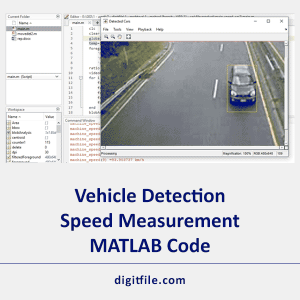 Implementation of a Vehicle Detection and Speed Measurement System using MATLAB Computer Vision ToolboxFree for VIP